
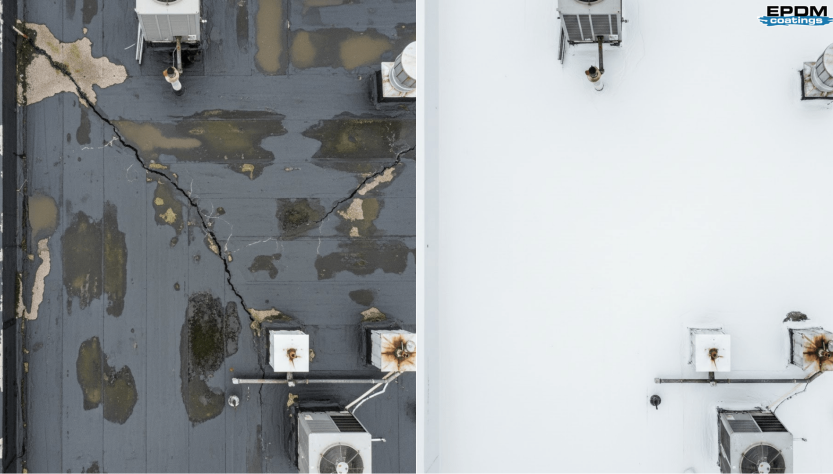
A roof leak rarely shows up at a convenient time. Usually, it starts small. A damp ceiling tile. A stain that wasn’t there last week. Maybe water around a wall after heavy rain. On the roof itself, you might find an old seam opening, rust around a fastener, cracked material near a penetration, or an area that has seen better days.
That does not always mean the entire roof is finished. In plenty of cases, the roof underneath is still sound. It just needs repairs in the problem areas and a new protective surface on top. That is where a liquid rubber roof coating can be useful.
EPDM Coatings’ Liquid Butyl Rubber is designed to restore existing roofs without tearing off the entire roofing system. Once the roof is properly prepared, the material is applied in liquid form and cures into a seamless rubber membrane over the surface.
The coating part is straightforward. Finding and fixing the real problems underneath it is the part you should not rush.
First, Find Out Where the Water Is Getting In
One thing that catches people out with roof leaks is that the wet spot inside the building is not always directly below the actual leak. Water can travel.
It can move along a seam, follow part of the roof structure, or enter around one penetration and appear somewhere else altogether. So, before opening a bucket of coating, inspect the roof properly.
On an EPDM roof, check the seams and edges first. Look for open sections, tears, loose membrane, or older repairs that may be separating.
On a metal roof, pay close attention to fasteners, joints, flashing, and rusted areas. Also look around vents, pipes, drains, curbs, and other roof penetrations. Those are the kinds of places where small openings can create much bigger problems below.
EPDM Coatings recommends repairing holes, gaps, seams, and tears larger than 1/16 inch before applying Liquid Butyl Rubber.
It is tempting to think the coating will take care of everything by itself. It should not have to.
Roof Sealant and Roof Coating Are Not Quite the Same Job
Sometimes the problem really is local. The roof itself may be in good condition, and one joint may need resealing. In that situation, a roof sealant may be all that is needed.
EPDM Coatings’ Butyl MS Caulk is designed for roofing joints and can bond to several roofing and construction materials, including EPDM rubber roofing, aluminum, steel, PVC, concrete, and wood.
That makes sense for smaller detail work. But if the roof is aging in several places at once, constantly chasing one leak after another gets old quickly.
You fix one seam. A few months later, another area starts leaking. Then an old section around a fastener needs attention.
At that point, coating the larger roof surface can make more sense than treating every problem as a separate repair forever.
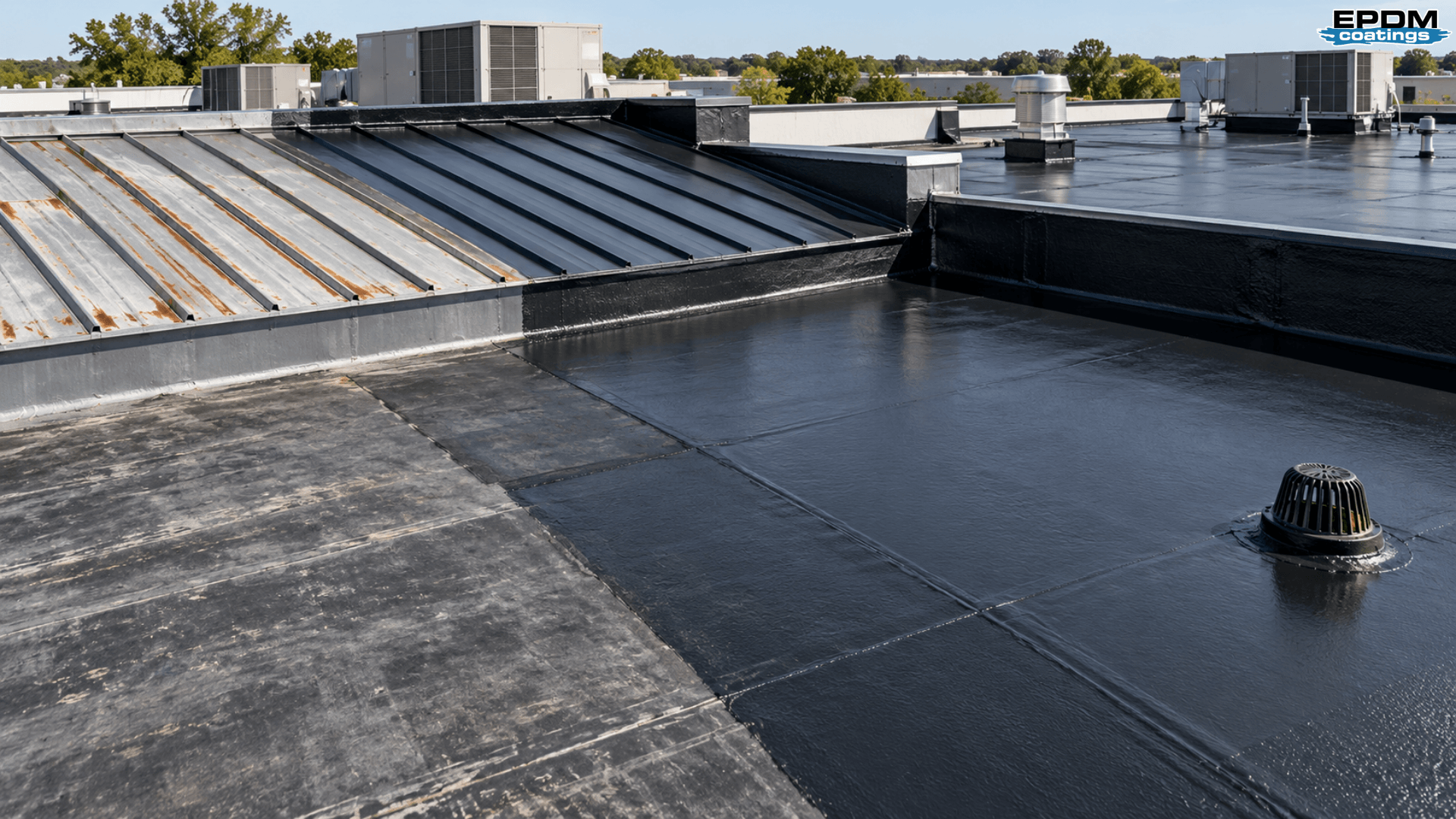
Liquid Butyl Rubber is applied over the prepared roof and cures into a continuous membrane. Since it starts as a liquid, it follows the shape of the existing roof instead of adding another sheet system with new field seams.
An Older EPDM Roof May Still Have Plenty of Life Left
Seeing a leak on an EPDM roof does not automatically mean the membrane needs to come off. Sometimes the roof is still generally sound, and the problem is concentrated around seams or damaged areas. Those repairs come first.
EPDM Coatings recommends SeamTight for certain seam repairs. Where reinforcement is needed, embed polyester fabric into the wet repair material. Once the repair work is complete, Liquid Butyl Rubber can be applied over the roof.
That order is important. Repair first. Coat second.
According to EPDM Coatings, applying Liquid Butyl Rubber over a sound single-ply EPDM roof can add about 20 more years of service life.
For an older roof that is still structurally usable, that is worth considering before assuming replacement is the only practical route.
Metal Roofs Have Their Own Warning Signs
Metal roofs often make problem areas fairly easy to spot. Rust is an obvious one.
You may also notice older sealant breaking away, corrosion around screws, worn flashing, or joints that are no longer as tight as they once were.
If rust is present, do not simply roll coating straight over loose oxidation. EPDM Coatings recommends using a wire brush to remove loose rust first.
You can coat light corrosion that is still firmly bonded to the metal with Liquid Butyl Rubber. More severe rust may need SeamTight treatment before applying the main coating.
Liquid Butyl Rubber can be used on approved metal roofing surfaces such as coated or galvanized steel, weathered aluminium, and weathered standing-seam or corrugated metal roofs.
Some smooth surfaces may need extra preparation before coating. That may not sound exciting, but surface preparation is one of those details that can make or break the job.
A Dirty Roof Is Not Ready for Coating
This is one of the easiest steps to underestimate. Roofs collect everything. Dust. Dirt. Grease. Mildew. Old residue. Loose material.
And, depending on the building, sometimes much more than you expect. Putting a new coating over contamination underneath is asking the material to bond to dirt instead of the roof.
EPDM Coatings offers Roof Protect to clean the roof before applying Liquid Butyl Rubber. It removes contaminants such as oil, grease, mildew, and dirt from the existing roofing surface.
After cleaning, rinse the roof thoroughly. Then let it dry. Completely.
That last part sounds obvious, but it is still worth saying. Do not wash the roof and immediately start coating because you are in a hurry to finish before lunch.
Give the surface time to dry properly.
How the Liquid Rubber Coating Is Applied
Once the repair and cleaning work is done, the job becomes much simpler. Liquid Butyl Rubber is designed as a one-coat system on most approved surfaces. The target thickness is around 20 mils, and one gallon covers about 50 square feet on a smooth surface.
That coverage figure matters. This is not ordinary paint, so the goal is not to roll it as thin as possible and see how far you can stretch the bucket.
You are building a waterproof rubber membrane. On smaller roofs, EPDM Coatings recommends using a squeegee and roller to spread the material over the prepared surface.
The product chemically cures rather than simply drying like a typical paint. As it cures, it forms a smooth, seamless membrane over the roof.
For anyone doing the work themselves, it helps to think in sections instead of trying to cover the entire roof at once. Repair the details. Clean. Let the surface dry.
Then apply the coating at the proper coverage rate. Simple usually works better than rushed.
Flat Roofs Bring Ponding Water Into the Picture
Flat roofs have one issue that sloped roofs usually deal with more easily: water can sit there. A low area may still hold water hours after a storm has passed.
That matters when choosing a coating. According to EPDM Coatings, fully cured Liquid Butyl Rubber can withstand ponding water year-round.
The published technical information also lists resistance to water, ozone, and ultraviolet exposure. The coating has 500% elongation and tensile strength of 1,520 PSI.
Why does elongation matter? Because roofs move. Not dramatically, but enough.
Roofing materials heat up during the day and cool down later. Metal expands and contracts—existing membranes flex. The coating needs enough flexibility to move with the roof rather than becoming rigid over it.
That is part of what makes a rubber coating different from simply painting the surface.
Do Not Use Roof Coating to Cover Up a Bad Roof
Coating has important limits.
A roof coating can protect and restore a roof that is still structurally sound. It cannot make rotten decking sound again. It cannot secure loose roofing that should have been repaired.
It cannot replace proper structural work. If a section is damaged, fix it. If material is loose, secure it. If the roof has a serious underlying problem, deal with that before applying the final waterproofing layer.
Think of Liquid Butyl Rubber as the protective skin over a repaired roof. Not as something used to hide whatever is underneath.
So, What Is the Best Way to Stop Roof Leaks?
There is no magic shortcut here, and that is probably a good thing. Start with the roof itself. Find the leak. Check the surrounding area instead of assuming you found the only problem.
Repair seams, tears, gaps, deteriorated caulk, rusted sections, and other obvious weak points. Clean everything properly. Wait until the surface is dry. Then apply the liquid rubber membrane at the recommended coverage.
That basic approach works whether you are dealing with an older EPDM roof, weathered metal, or a flat roof that needs a new waterproof surface.
A small leak does not automatically mean a complete roof replacement.
If the existing roofing system is still sound, a combination of targeted repair, the right roof sealant, and a full Liquid Butyl Rubber coating may give the roof a much longer useful life.
Before starting the project, review the Liquid Butyl Rubber product information, check the approved applications, and read the roof repair and application instructions.
A little extra time spent understanding the roof before you coat it is usually time well spent.